Decking is a great option for many Scottish gardens, as it’s versatile, practical, and looks good. But choosing the right decking is also a little more complicated than most people realise, as there’s so much choice in material now.
As expert decking installers, we’ve tried them all. So we’re here to break down which decking option is best for you, according to your budget, how you use your garden, and how much maintenance you want to do.
Why decking works particularly well in Scotland
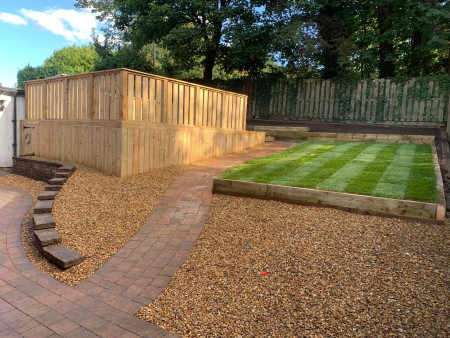
Decking is a top choice for many of our clients because it’s great for sloped or awkward ground. Many gardens in Scotland have different levels – decking gives you a great liveable space while avoiding any groundwork or complicated landscaping.
For example, our clients Ann-marie and Gordon had an unsafe sloped garden, and we installed a large decking area so the whole family could safely sit outside, entertain, and enjoy the previously wasted space.
When it’s installed and maintained as it should be, decking works well in the wet Scottish weather for many years; it’s why it’s a popular choice for many Ayrshire homeowners.
The importance of proper decking installation
Before we go into the different types of decking, it’s important to understand that your decking is only as good as its installation. Decking needs good drainage and foundations to avoid it from sinking or flooding.
At Ralston Contracts, we make sure your decking is installed to last. From the ground up, we focus on making sure it’s safe, secure, and stable for years to come. If you choose to do it yourself, please do your research first!
The main types of decking – and what works best in Scotland
Here are the key things you need to know about the most popular types of decking.
Timber/wooden decking
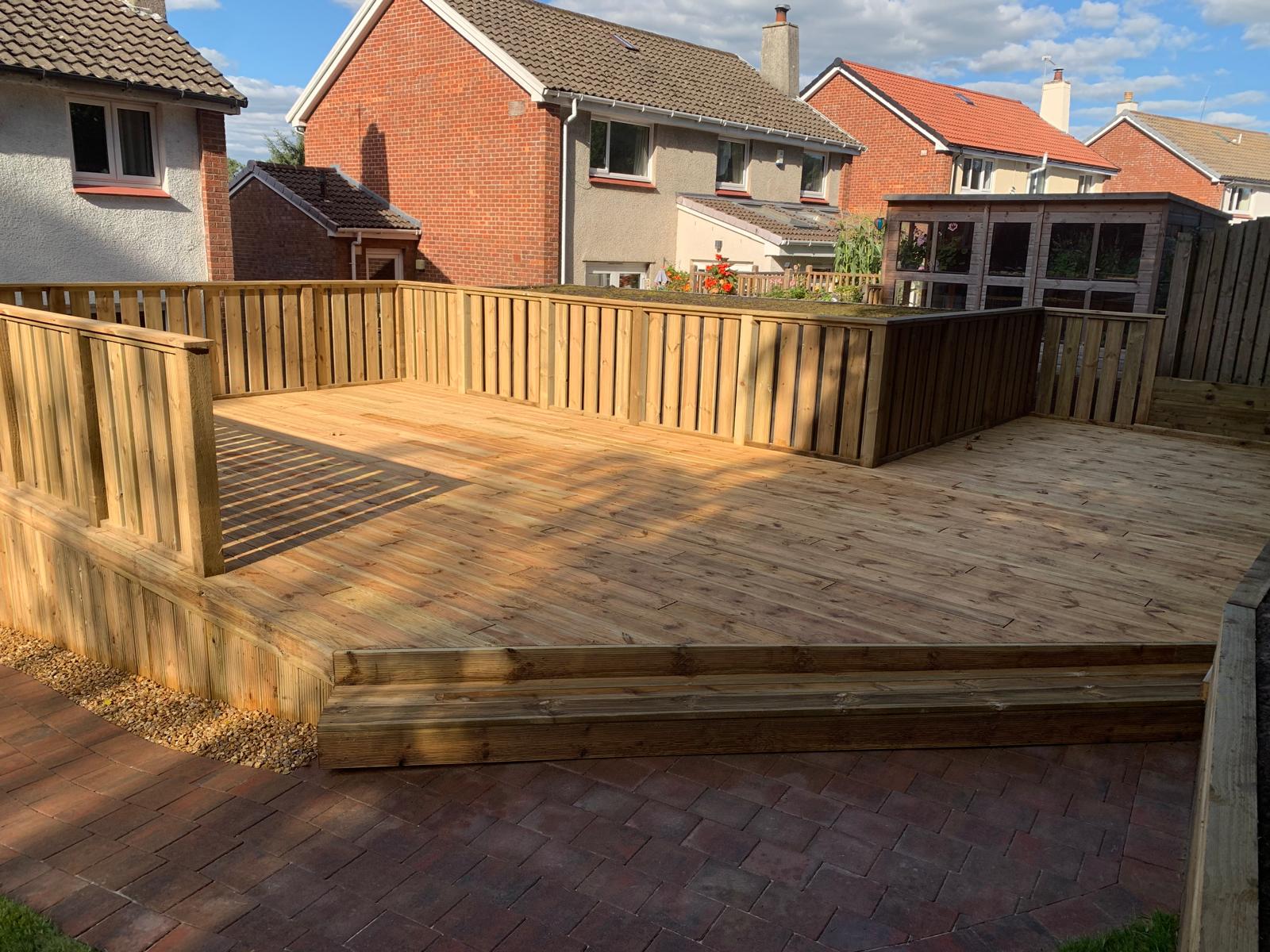
Timber decking is the most traditional option. With a warm, natural wood look, it’s always an eye-pleaser. Timber decking has a lower upfront cost than most other types, but it requires the most maintenance as it’s more prone to weathering, moss, and warping if not treated regularly.
Pros of timber decking
Warm, natural look that suits a wide range of properties
Lower upfront cost than most alternatives
Easy to source and widely available
Can be sanded and refinished if it gets damaged
You can change the colour often, as all you need to do is repaint or stain the timber
Cons of timber decking
Requires regular oiling, staining, or treating to stay in good condition
Prone to warping, splitting, and rotting in wet conditions if not treated regularly because moss and algae build up quickly in the Scottish climate
Can become slippery when wet if not treated
Likely to need replacing sooner than other options without consistent upkeep
Important consideration for installing timber decking
You need to understand the wood’s expansion and how that affects the overall design. Before trying to install yourself, please look into this (or contact a decking professional like us for a quote!).
Composite decking
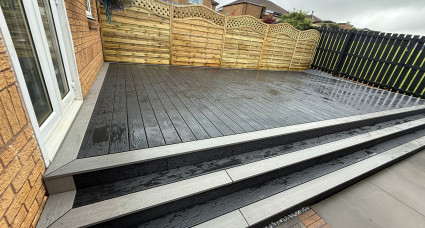
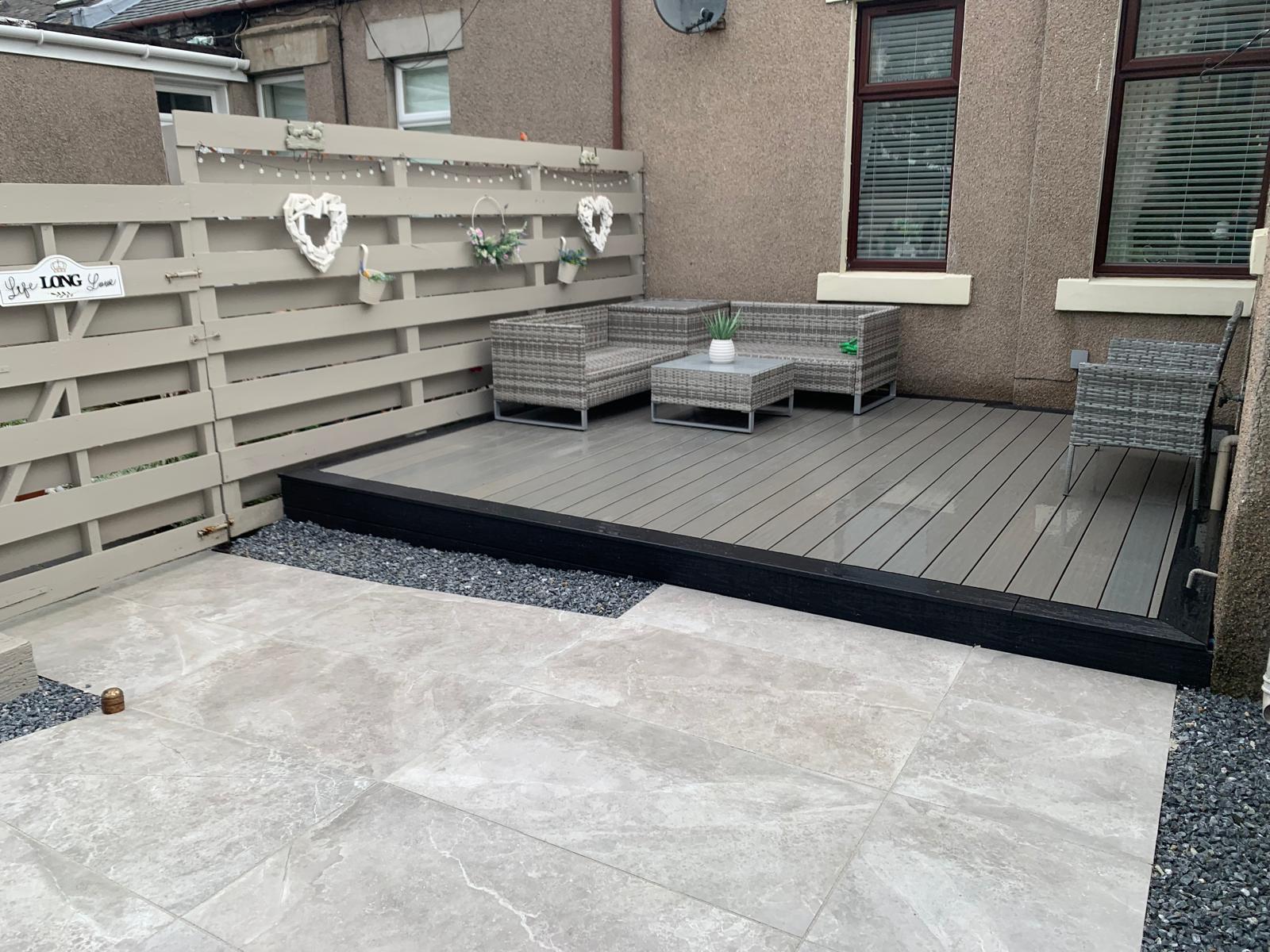
Composite decking is becoming the most popular choice as it works for most budgets and gardens. It’s made from a mix of wood fibre and plastic. It looks similar to timber but is far more durable and lower maintenance. Composite holds up well in wet conditions and doesn't warp or rot in the same way timber does.
Pros of composite decking
Much lower maintenance than timber, no oiling or staining required
Holds up well in wet conditions without warping or rotting
Wide range of colours and finishes to suit different properties
Good mid-range option that balances cost and durability
Consistent look that doesn't fade significantly over time
Cons of composite decking
Can still accumulate algae and dirt, requiring occasional cleaning
Doesn't quite replicate the feel of real wood underfoot
Some cheaper composite boards can fade or look less premium over time
Higher upfront cost than timber
In exposed sunlight, composite decking retains heat and can be warm to walk on
If composite is scratched (for example, with garden furniture), it’s difficult to repair the surface without replacing the board. If this happens years down the line, finding the exact colour match for your boards may be difficult.
Important consideration for installing composite decking
Often, composite decking is installed with a wooden sub-frame. If installed correctly, this can last for years. However, installing a composite sub-frame, while it comes with a higher cost, will last much longer. Please consider the longevity of the timber frame, if you opt for this!
Millboard decking
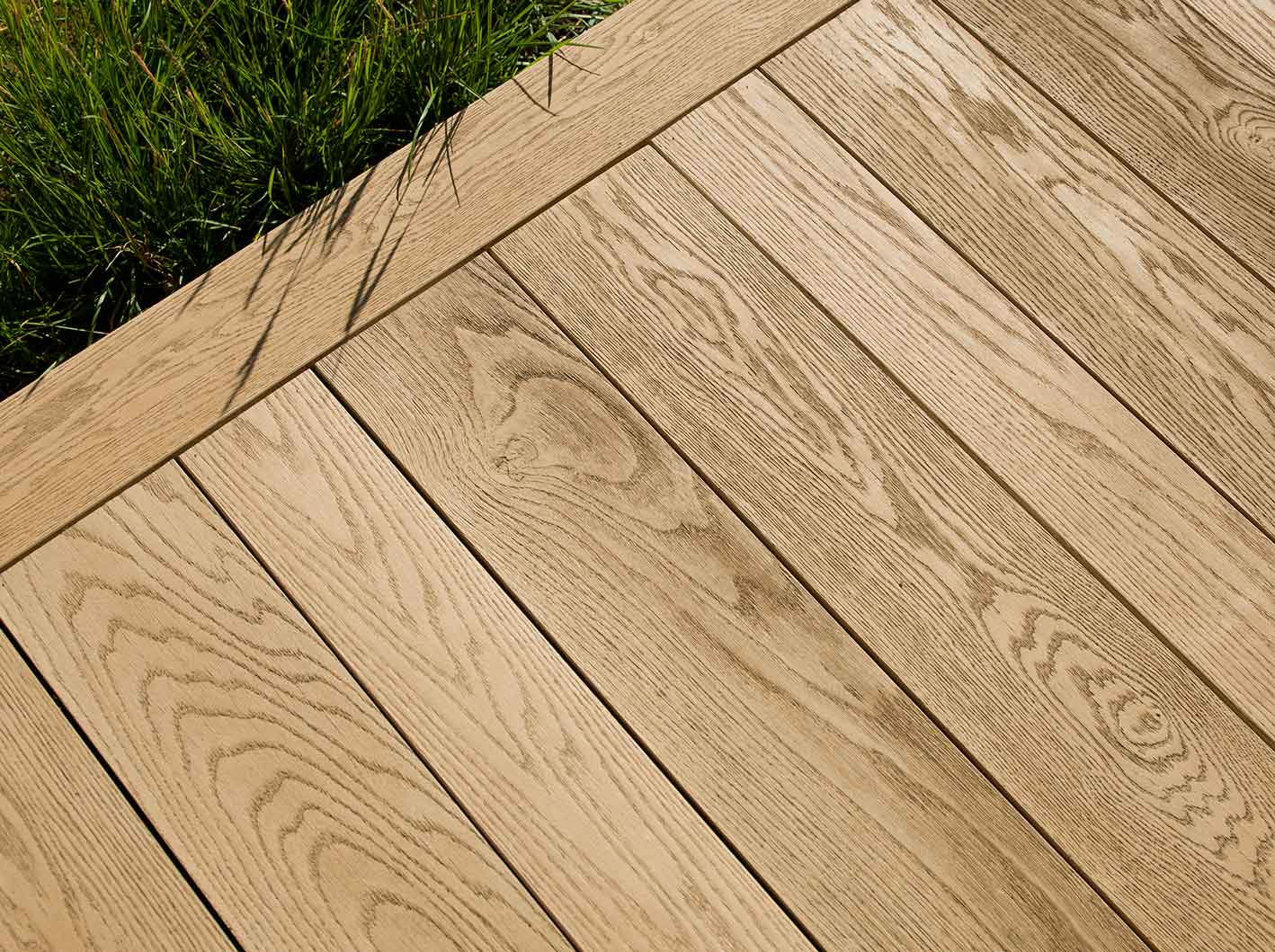
Millboard is a more premium option compared to composite or timber. It’s more realistic than composite, with a deep grain and texture that looks almost identical to real wood. It’s extremely durable, completely waterproof, and requires very little maintenance. The highest price point but often the longest lasting.
Pros of millboard decking
The most realistic-looking alternative to real timber
Completely waterproof and highly durable
Very little maintenance required once installed
Resistant to fading, staining, and weathering
Long lifespan makes it cost-effective over time
Cons of millboard decking
The highest upfront cost of all the options
In exposed sunlight, millboard decking retains heat and can be warm to walk on
When installing millboard, the fixings (screws) become hidden below the rubber surface, which is great for aesthetics but makes it difficult if you need to replace a board.
Porcelain decking
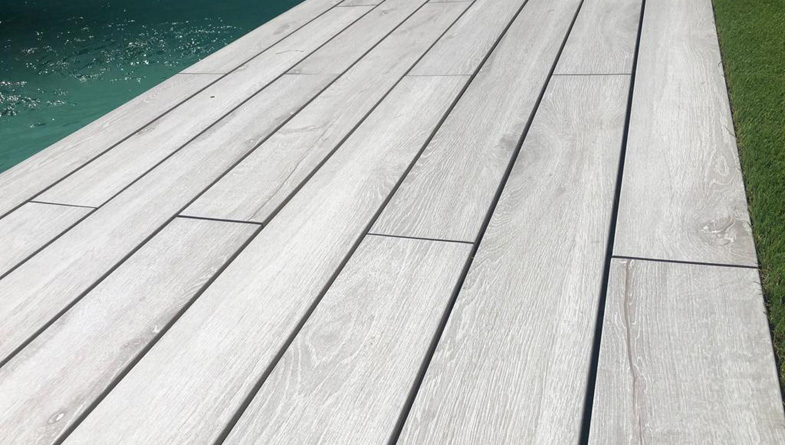
This is the most contemporary and premium option. With a look more like slabs, this decking works well alongside porcelain patios for a seamless look. Very durable and low maintenance but has a higher cost.
Pros of porcelain decking
Extremely durable and long lasting
Very low maintenance, easy to clean
Contemporary, sleek look suits modern properties
Cons of porcelain decking
Can be slippery when wet without an anti-slip finish, worth checking before specifying
Cold underfoot compared to timber or composite
Higher cost and more complex to install
Less suited to traditional or older properties aesthetically
Fewer design options compared to composite or millboard
Important consideration for installing porcelain decking
Porcelain decking needs to be installed like a patio with the correct sub-base. This makes porcelain decking more expensive and complicated to install, especially if you have a sloped garden (where for example, you’d need to add a retaining wall).
What decking works best for your needs?
Now you know the options and the pros and cons, it’s about weighing up which one suits your:
Budget
Maintenance needs
Goals for the space
Property style
Garden layout
For example, if you have a limited budget, you might want to consider the upfront cost versus long-term cost. Timber might be cheaper to install but more expensive to maintain, whereas millboard costs more upfront but needs very little over the years.
The best decking type also depends on how you want to use your garden. If you’re a family with young children and a dog, you’ll need something different to a couple who entertain occasionally.
At Ralston Contracts, we offer a free landscape design consultation to talk you through this decision and make sure it’s the right decking type for you.
Professional decking installers in Ayrshire – get your garden decked out
As you can see, the right decking choice varies from person to person. If you’re in Ayrshire and need support, we would be delighted to discuss your goals and map out the best option to suit you. Please get in touch to arrange your free consultation.